ISSR CLASSES
Checkpoint Science
iGCSE Chemistry
iGCSE Physics
iGCSE Coordinated Science
A-Level Chemistry
PRACTICALS
Practicals Home
Practicals A-Z
Study Plan for Practical Work
|
|
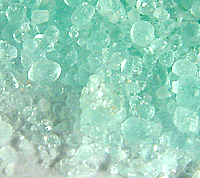
Iron(II) is pale green in aqueous solution due to the hexaquo iron(II) ion, [Fe(H2O)6]2+. Hydrated, solid iron(II) compounds are also pale green, but may have yellow or brown discolourations due to atmospheric oxidation to iron(III). |
|
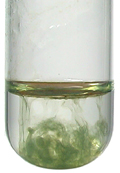
Addition of sodium hydroxide solution causes deprotonation and gives a gelatinous, green precipitate of iron(II) hydroxide. This precipitate is not soluble in excess sodium hydroxide. |
|
|
Fe2+(aq) + 2OH-(aq) ⇒ Fe(OH)2(s) |
|
or [Fe(H2O)6]2+(aq) + 2OH-(aq) ⇒ Fe(H2O)4(OH)2(s) |
Video - iron(II) and sodium hydroxide solution
|
|
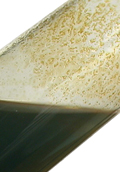
The appearance of a brown solid, particularly on the upper glass surfaces of the test tube, is caused by the atmospheric oxidation of the iron(II) hydroxide to iron(III) hydroxide. This oxidation process can be accelerated by the addition of an oxidizing agent like hydrogen peroxide. |
Addition of ammonia solution gives the same green precipitate of iron(II) hydroxide (ammonia solution is alkaline as it produces hydroxide ions in aqueous solution). No ammino complex of iron(II) is formed, so the precipitate is not soluble in excess ammonia. Atmospheric oxidation will again produce brown iron(III) hydroxide.
Iron(II) salts are oxidized by a number of oxidizing agents to iron(III). For example:
Video - oxidation of iron(II) by acidified potassium manganate(VII) solution