ISSR CLASSES
Checkpoint Science
iGCSE Chemistry
iGCSE Physics
iGCSE Coordinated Science
A-Level Chemistry
PRACTICALS
Practicals Home
Practicals A-Z
Study Plan for Practical Work
|
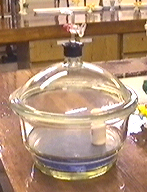
A device for drying chemicals. A vacuum desiccator is made of thick glass to allow the air to be removed from it. This speeds up the drying process. The samples usually sit on top of a perforated zinc tray below which is a desiccant (drying agent). This is a chemical which extracts water from the air. If your sample for drying is in a sample bottle, make sure the lid is not on or the moisture can't escape. It may seem obvious, but many students don't think about it! |
|
|
|
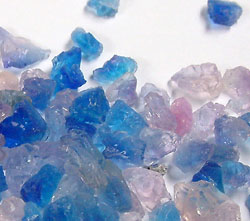
We often use self-indicating silica gel for the desiccant. This can be re-used as it can be dried out in a hot oven after it has absorbed moisture and become wet. It contains a little cobalt(II) chloride which is blue when dry and pink when wet. This shows when the silica gel needs to be replaced. Silica gel is often found in small packets protecting sensitive equipment, like cameras, from moisture. |